What Is Vicarious Trauma? Causes, Symptoms & Coping
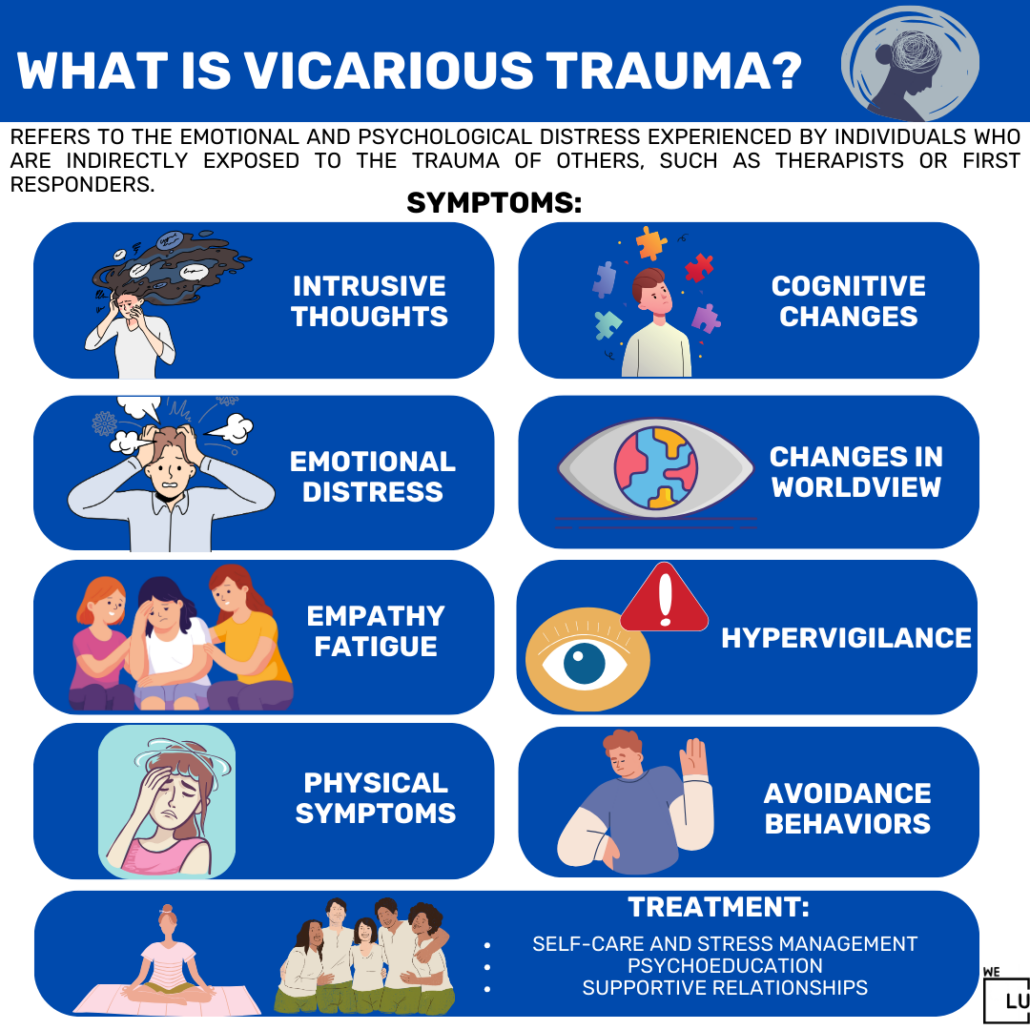
Secondary trauma — aka compassion fatigue, vicarious trauma, or secondary traumatic stress — occurs when someone is significantly impacted by someone else's trauma. According to Saba Harouni.
What Is Vicarious Trauma?
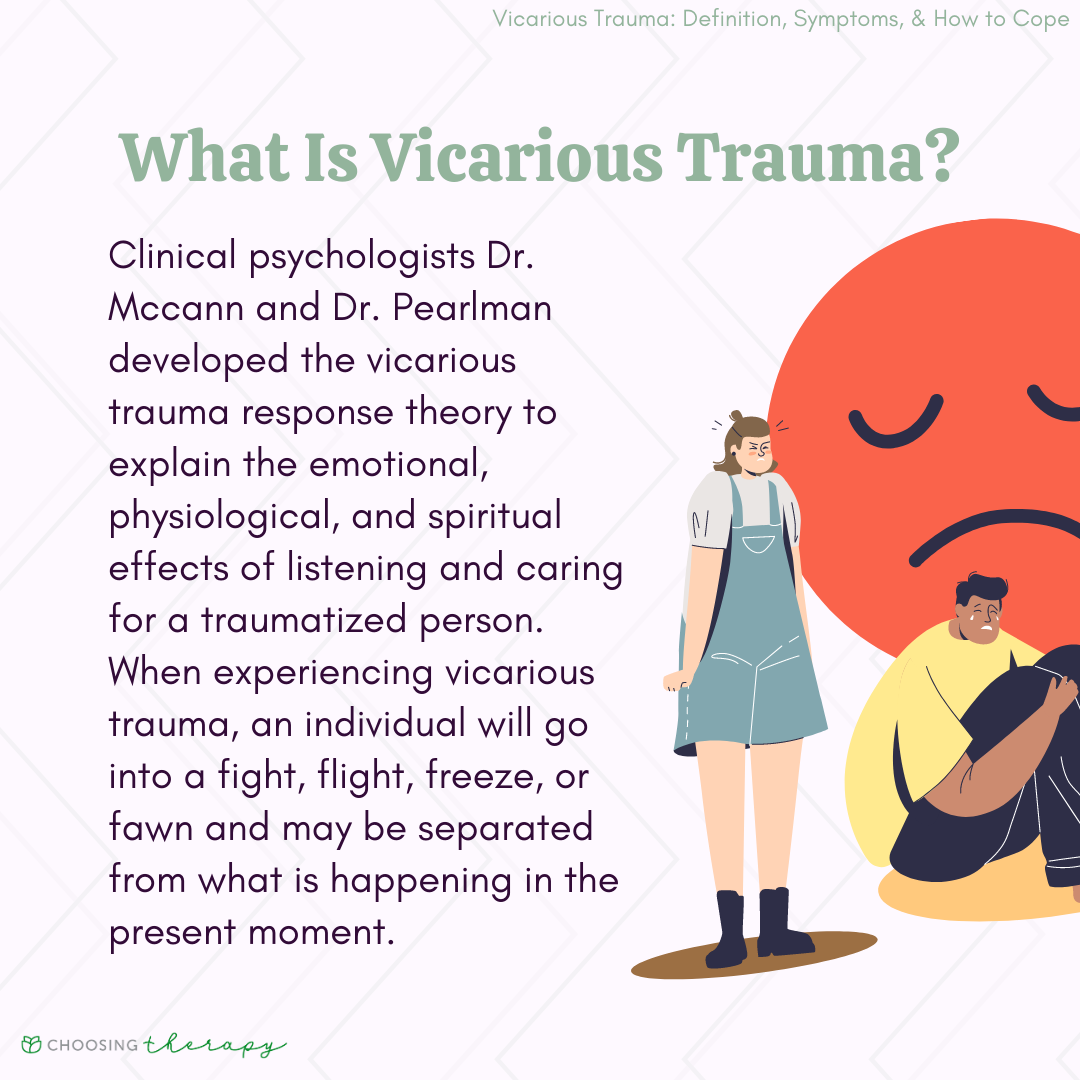
Secondary trauma, vicarious trauma, and, less formally, second-hand trauma are all terms used to describe the phenomena where an individual is indirectly, yet significantly impacted by learning of.
Identify Stress and Vicarious, Secondary Trauma Ausmed

Vicarious trauma is the experience of absorbing others' pain in times of their distress so deeply that it affects your own well-being. It's closely related to concepts like empathy fatigue.
Secondary & Vicarious Trauma YouTube

The concept of "vicarious traumatization" was first introduced by McCann and Pearlman (), and from then on the construct gained increasing interest among researchers (Branson, 2019; Ashley-Binge and Cousins, 2020).Figley used the term "secondary traumatic stress" or "vicarious traumatization" to refer to all those individuals who, because of repeated and close relationships with.
PPT When Caring Hurts Secondary Traumatization & SelfCare PowerPoint Presentation ID1098339
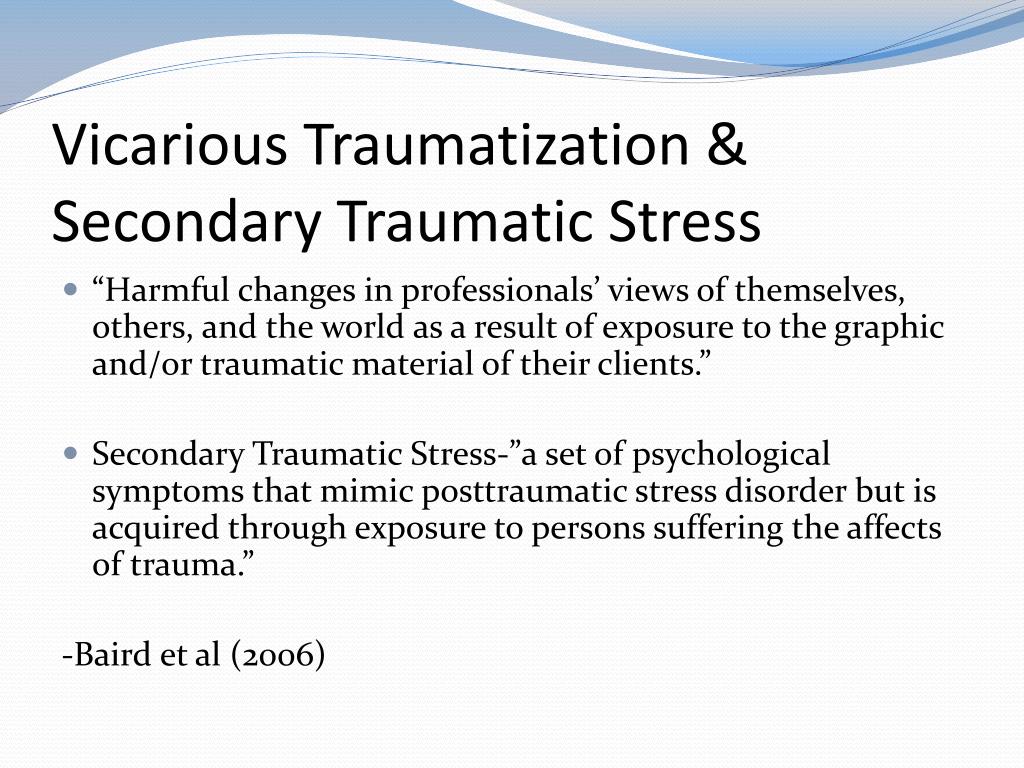
Vicarious trauma (VT) and secondary traumatic stress (STS) or compassion fatigue both describe effects of working with traumatized persons on therapists. Despite conceptual similarities, their emphases differ: cognitive schemas vs. posttraumatic symptoms and burnout, respectively. The TSI Belief Scale (TSI-BSL) measures VT; the Compassion.
PPT Compassion Fatigue Vicarious Trauma and self care PowerPoint Presentation ID1453900
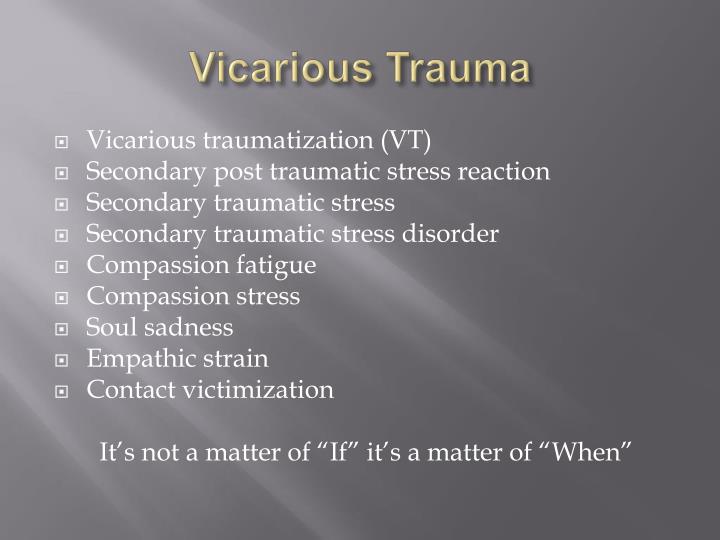
1.1. Secondary traumatic stress. Secondary traumatic stress (STS) is defined as 'the stress deriving from helping others who are suffering or who have been traumatized' (Figley, 1999, p. 10).STS relates to behaviours and emotions, and manifests as the very same trauma symptoms that are displayed after direct exposure to trauma (Figley, 1995)..
Taking Care of Teachers Secondary Trauma Coping Mechanisms
Also known as "compassion fatigue" or the "cost of caring," vicarious trauma occurs when an individual develops trauma symptoms related to the pain and fear they witness in those they serve who have experienced trauma and stress. The American Counseling Association defines vicarious trauma as "the emotional residue of exposure to traumatic stories and experiences of others through.
Compassion Satisfaction to Combat WorkRelated Burnout, Vicarious Trauma, and Secondary

Vicarious trauma (VT) and Secondary Traumatic Stress (STS) are frequently used interchangeably to refer to the indirect trauma that can occur when we are exposed to difficult or disturbing images and stories second-hand. This can occur by viewing graphic news reports, gruesome or frightening television shows and various other media, hearing a.
PPT Compassion Fatigue Vicarious Trauma and self care PowerPoint Presentation ID1453900
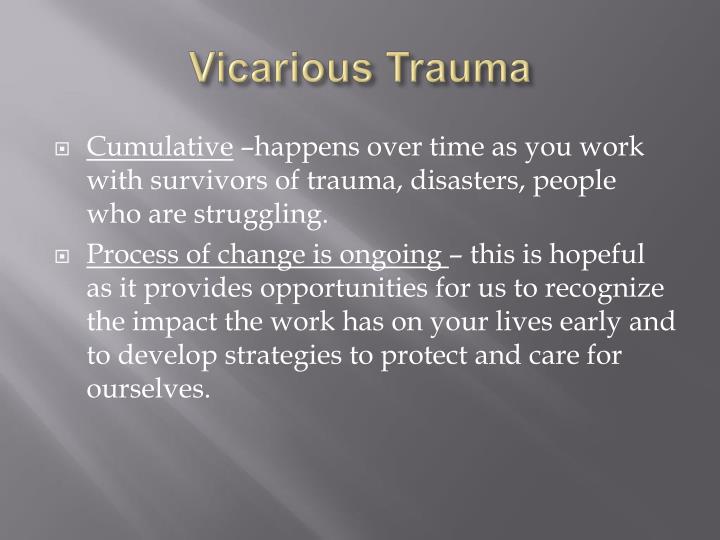
Both vicarious trauma and secondary trauma are indirect trauma. They occur when someone is a witness to another person's trauma. Retraumatization is when something happens, and a person is reminded of their own personal trauma (more on this below). Vicarious Trauma. The term "vicarious trauma" was coined by Pearlman & Saakvitne in 1995.
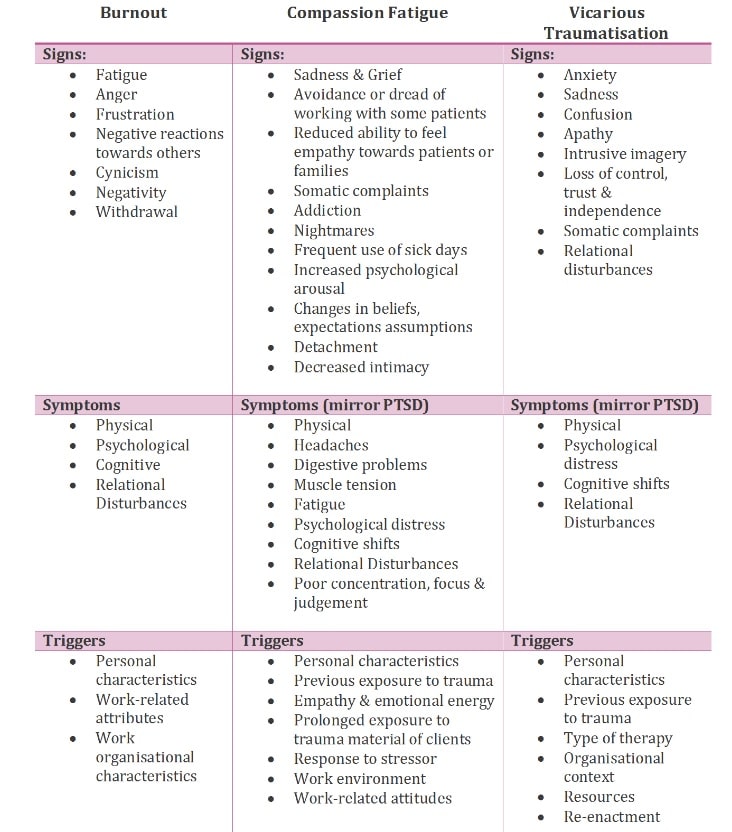
Overview of Burnout, Compassion Fatigue, and Vicarious Traumatisation Download Scientific Diagram

Secondary traumatic stress is also known as " vicarious traumatization " or " compassion fatigue." Figley (1995), the psychologist responsible for much of our understanding of secondary traumatic stress, suggested the term compassion fatigue as a more accurate and less derogative term, and used the terms interchangeably.However, compassion fatigue, as a construct, evolved beyond the.
PPT Trauma And First Responders PowerPoint Presentation, free download ID2194680
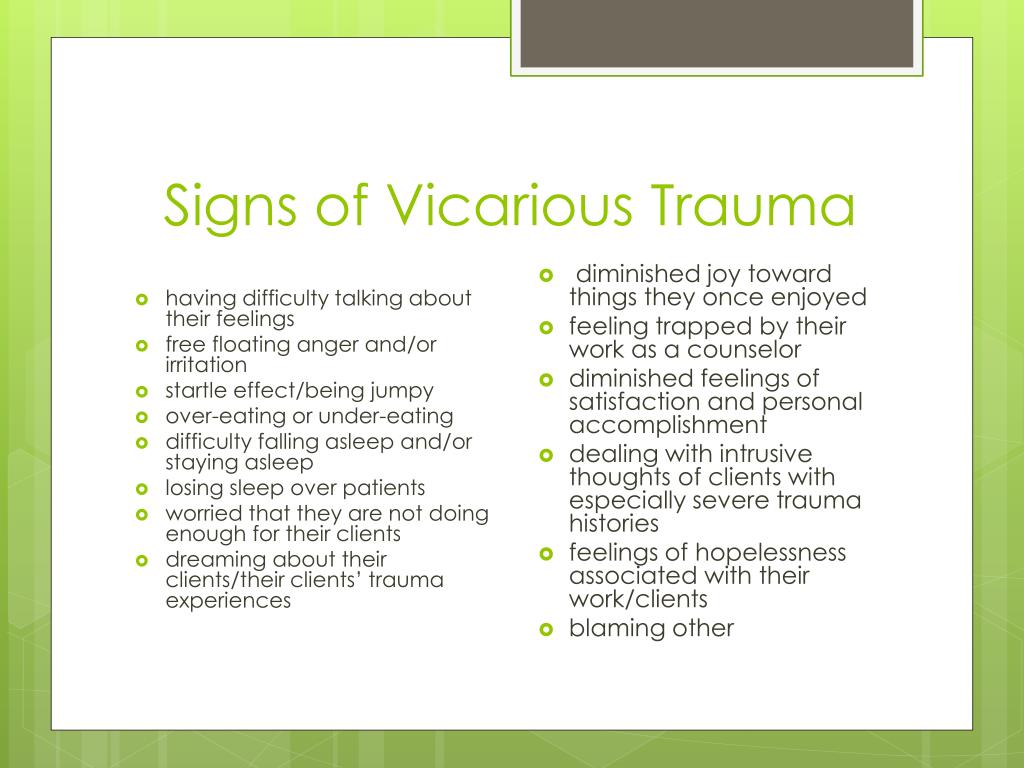
Secondary sources of trauma, such as hearing a co-worker's retelling of their own trauma, can invoke vicarious trauma. Symptoms of vicarious trauma resemble the effects of direct trauma in some ways.
Vicarious trauma in mental health workers YouTube

How Being Trauma-Informed Improves Criminal Justice System Responses Policy Research Associates, Inc. 1 Fact Sheet: Vicarious Trauma Vicarious trauma was first identified in 1980s as the "cost of caring" (Figley, 1982). It is sometimes referred to as "compassion fatigue" (Perlman & Saakvitne, 1995). Symptoms can
Professional Burnout vs Compassion Fatigue vs Vicarious Trauma
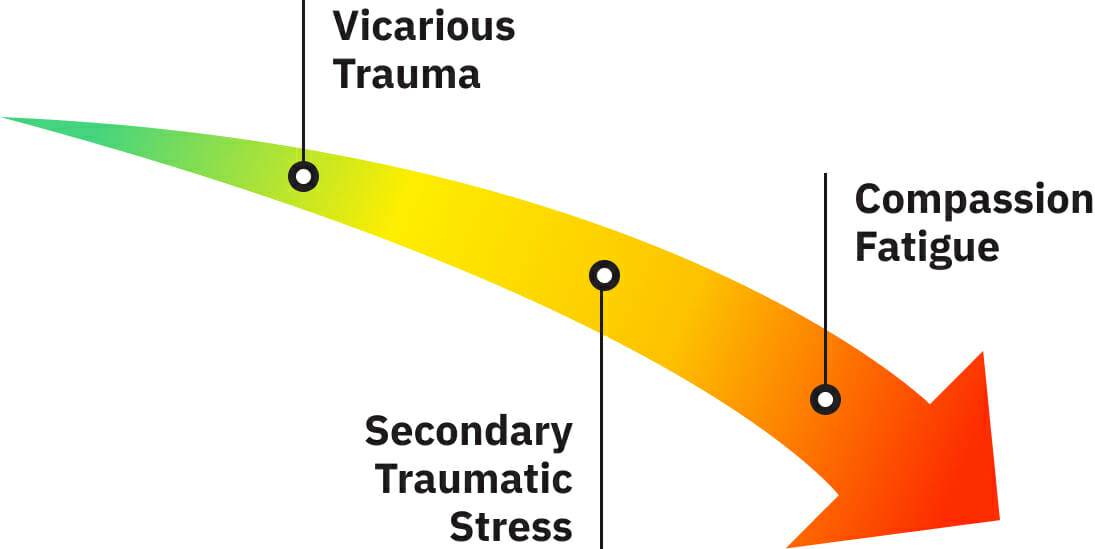
Secondary trauma, often called vicarious trauma or compassion fatigue, is a complex emotional and psychological phenomenon that occurs when individuals indirectly experience the distress and suffering of others who have undergone traumatic events. The condition is commonly observed among professionals in caregiving roles and friends and family.
Vicarious trauma what it is and how to prevent it
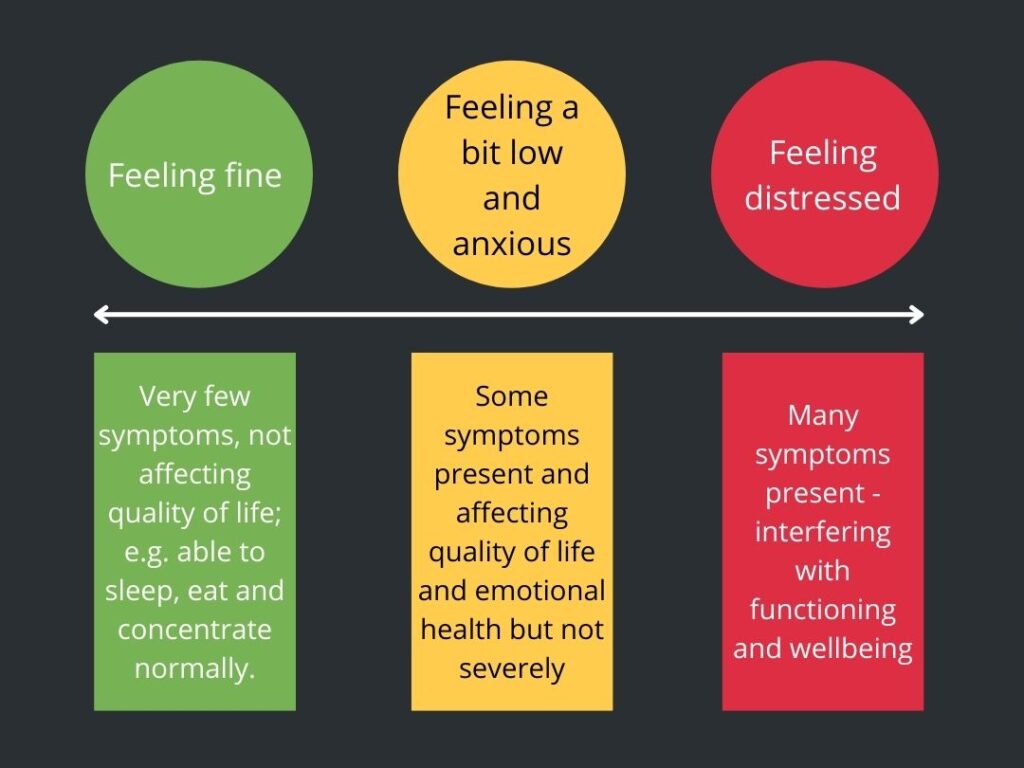
According to a 2019 review, the symptoms of vicarious trauma can include: unwelcome thoughts of client-induced imagery. nightmares. missing work. social withdrawal. avoiding traumatic disclosures.
Vicarious Trauma in Clinicians Fostering Resilience and Preventing Burnout
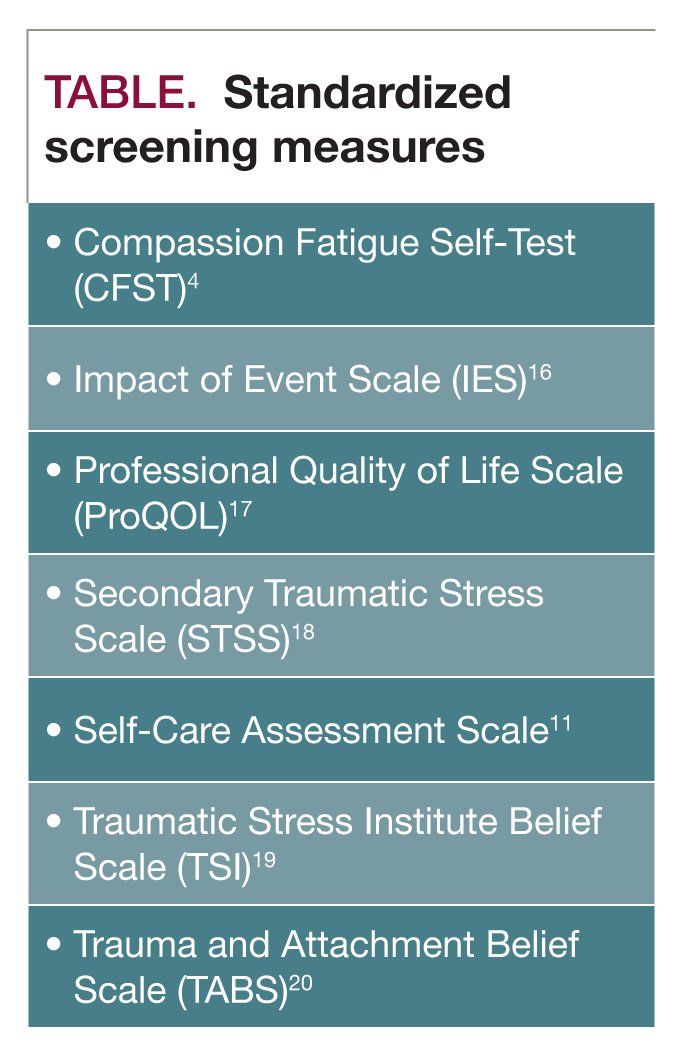
Professionals working in the fields of trauma, victim assistance, mental health, law enforcement, fire response, emergency medical services, and other professions are exposed to traumatic events on a regular basis; in some cases, workers are exposed every day. Vicarious trauma (VT) refers to the exposure to the trauma experiences of others, considered an occupational challenge for all of these.
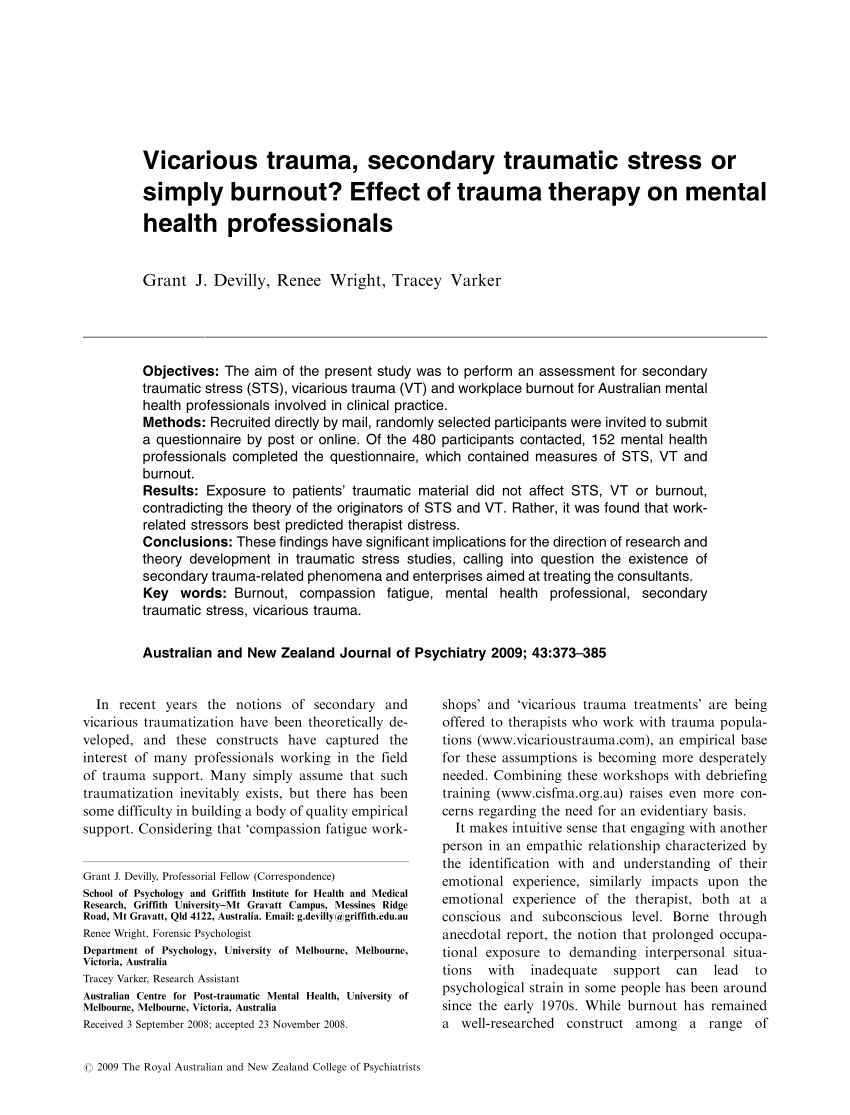
(PDF) Vicarious Trauma, Secondary Traumatic Stress or Simply Burnout? Effect of Trauma Therapy
Sharon Rae Jenkins2;3 and Stephanie Baird2. Vicarious trauma (VT) and secondary traumatic stress (STS) or compassion fatigue both describe effects of working with traumatized persons on therapists. Despite conceptual similarities, their em-phases differ: cognitive schemas vs. posttraumatic symptoms and burnout, respectively.
.